

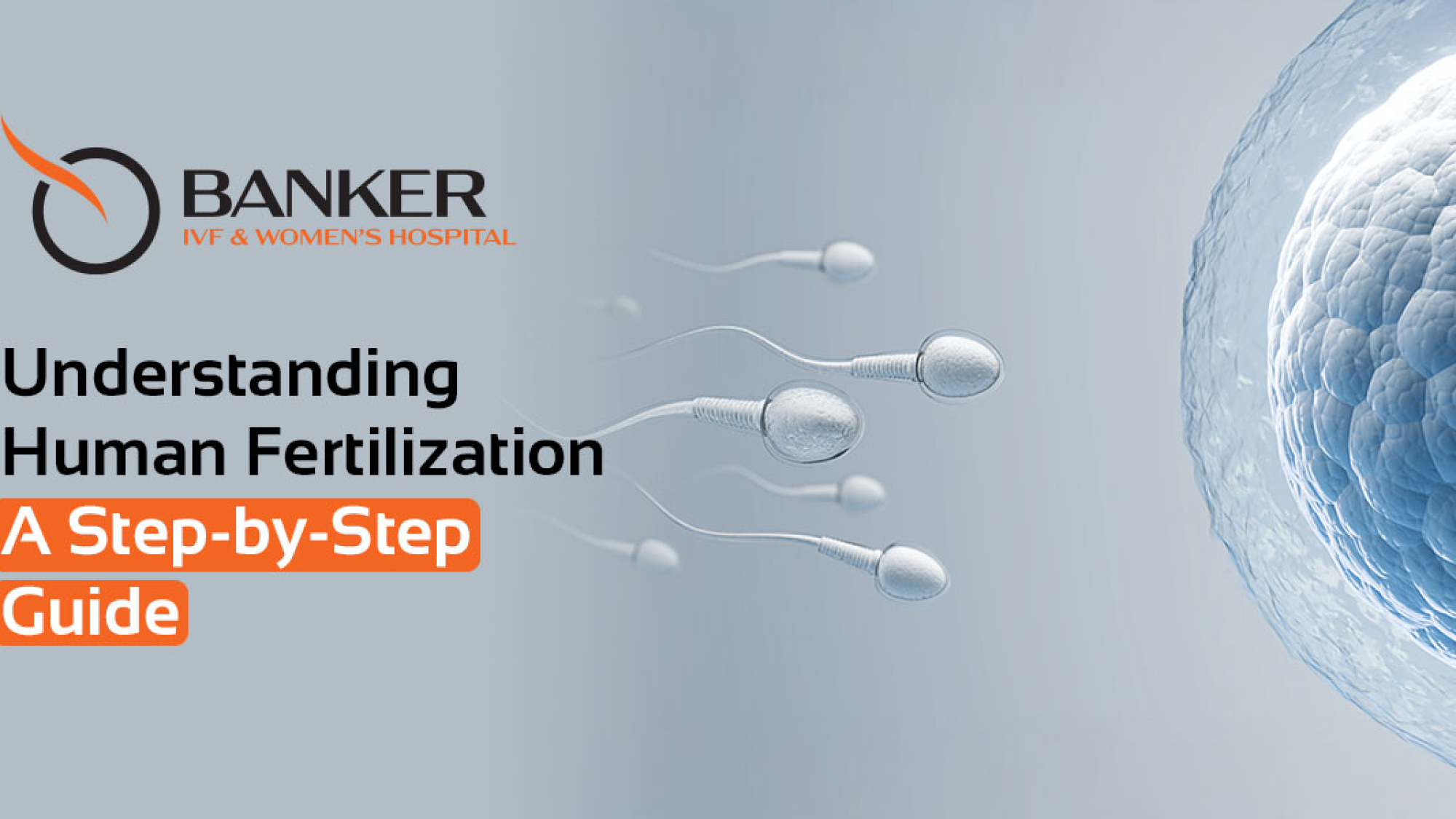
In reproductive medicine, learning how our bodies carry out the complex process of human fertilization gives more than scientific knowledge—it provides emotional clarity and peace of mind to individuals in pursuit of parenthood. Whether natural conception is your goal or looking to utilize assisted means of conception, such as the IVF Treatment Process in Ahmedabad, understanding the process of fertilization in a step-by-step manner can be valuable and empowering.
How Does Human Fertilization Happen?
Fertilization is a wonder of nature. Billions of biological actions happen quietly and carefully every moment around the world to establish that potential for new life. To many people, fertilization is just the joining of sperm and egg. However, to fertility specialists, it is huge number of biological steps, and when you understand what those steps involve, it becomes a source of hope and assurance.
In the clinical context, we live in an age where assisted reproductive technologies (ART) is changing people’s lives and for this reason, understanding how fertilization happens in IVF and also naturally can provide tremendous value. Following is a guided and informative breakdown of how fertilization truly takes place.
Bonus Read – IVF in 2025: Future Tech & Fertility Breakthroughs
What Is Fertilization?
Fertilization is the fusion of a sperm cell and an egg cell. Each carries half of the genetic material needed to make a person, so when they fuse, the zygote has a complete set of 46 chromosomes. It is the very first step of a new life, and it happens in a matter of hours.
The words fertilization, conception and pregnancy are often mixed up:
| Term | What it means | When it happens |
|---|---|---|
| Fertilization | The sperm and egg fuse to form a zygote | Within about 24 hours after ovulation |
| Implantation | The embryo attaches to the uterine lining | About 6 to 10 days after fertilization |
| Conception | Often used for fertilization, sometimes for implantation | Varies with how the word is used |
| Pregnancy | Medically counted from implantation, with the due date dated from the last period | From implantation onwards |
Fertilization Step by Step: 7 Steps From Ovulation to Implantation
Step 1: Ovulation
Around the middle of the menstrual cycle, a surge of luteinising hormone (LH) makes the ovary release a mature egg. The finger-like ends of the fallopian tube (the fimbriae) sweep the egg into the tube. The egg is surrounded by a protective shell called the zona pellucida, and it can be fertilized for only about 12 to 24 hours.
Step 2: The sperm’s journey
A man releases tens to hundreds of millions of sperm. They swim through the cervix, across the uterus and into the fallopian tube. Most are lost on the way, and only a few hundred reach the egg. During this journey the sperm go through a final change called capacitation, which makes them able to fertilize an egg. Sperm can survive in the female body for up to 5 days. [check: Dr. Banker to confirm these figures]
Step 3: The sperm reaches and penetrates the egg
The sperm pass through the cells around the egg and bind to the zona pellucida. On contact, the head of the sperm releases enzymes in a process called the acrosome reaction. These enzymes help the sperm to dig a path through the zona pellucida.
Step 4: Fusion and the block to a second sperm
The first sperm to reach the egg membrane fuses with it. This triggers the egg to release substances that harden the zona pellucida, so no other sperm can enter. This is called the block to polyspermy. The egg finishes its final division, and the nuclei of the egg and sperm (called pronuclei) come together, which takes about 16 to 18 hours. The result is a single cell, the zygote.
Step 5: The zygote divides
Within about a day the zygote divides into two cells, and keeps dividing: 4 cells on day 2, 8 cells on day 3, and a ball of 16 or more cells called a morula on day 4. This process is called cleavage. The embryo is gently moved along the fallopian tube towards the uterus by tiny hairs and muscle contractions.
Step 6: The blastocyst forms
By day 5 to 6 the embryo has become a blastocyst, a hollow ball with two parts: an inner group of cells that becomes the baby, and an outer layer that becomes the placenta. The blastocyst then hatches out of the zona pellucida so it can attach to the uterus.
Step 7: Implantation
About 6 to 10 days after fertilization, the blastocyst attaches to the uterine lining and burrows into it. The cells that will form the placenta begin to make the hormone hCG. This is the hormone that a pregnancy test detects. A home pregnancy test is usually reliable from the day of your missed period, around 14 days after ovulation.
A Must Read – Pregnancy Through the IVF Process

Fertilization Timeline: What Happens Day by Day
Day 0 is the day of fertilization, which is about the same day as ovulation.
| Time | What happens | Where |
|---|---|---|
| Day 0 (first 12 to 24 hours) | The egg is released and one sperm fuses with it. The zygote forms | Fallopian tube (ampulla) |
| Day 1 | The zygote divides into 2 cells | Fallopian tube |
| Day 2 | 4 cells | Fallopian tube |
| Day 3 | 8 cells | Fallopian tube, moving toward the uterus |
| Day 4 | A ball of 16 or more cells (morula) reaches the uterus | Uterus |
| Day 5 to 6 | The blastocyst forms and hatches from its shell | Uterus |
| Day 6 to 10 | The blastocyst implants in the uterine lining | Uterus |
| About 2 weeks after ovulation | hCG is high enough for a home pregnancy test to turn positive | Blood and urine |
These are typical timings. Every person and every cycle is different.
Events Before, During and After Fertilization
| Stage | Main events |
|---|---|
| Before fertilization (pre-fertilization) | Formation of sperm (spermatogenesis) and egg (oogenesis), ovulation, release of sperm into the vagina (insemination), transport of sperm to the egg, capacitation |
| During fertilization | Sperm binds to the zona pellucida, acrosome reaction, entry of one sperm, block to polyspermy, completion of the egg’s division, fusion of the two nuclei to form the zygote |
| After fertilization (post-fertilization) | Cleavage divisions, morula, blastocyst, hatching, implantation, start of hCG production |
Can You Feel Fertilization? Signs to Know
No. Fertilization happens at a microscopic level and has no symptoms. Any feeling you notice in the first few days is not a sign of fertilization. Signs you may notice are:
- Around ovulation: clear, stretchy cervical mucus, mild one-sided pelvic pain, and a rise in your resting body temperature after ovulation.
- Around implantation (6 to 10 days later): some women notice light spotting or mild cramps. Many notice nothing.
- After a missed period: nausea, tender breasts, tiredness and a positive pregnancy test.
The only reliable way to know is a pregnancy test, taken from the day of your missed period.
How Does Fertilization Work in IVF?
In IVF, fertilization happens in a laboratory dish instead of the fallopian tube. The steps are:
- Stimulation. Fertility injections help several eggs mature at the same time.
- Trigger injection. A final injection prepares the eggs for release.
- Egg retrieval. About 34 to 36 hours after the trigger, and before the eggs would ovulate by themselves, the eggs are collected with a fine needle under sedation.
- Fertilization in the lab. The eggs are fertilized by IVF or ICSI (see the table).
- Embryo culture. The embryos grow in an incubator for 5 to 6 days, until they reach the blastocyst stage.
- Embryo transfer. One embryo is placed in the uterus, or embryos are frozen for a later transfer.
| Natural fertilization | Conventional IVF | ICSI | |
|---|---|---|---|
| Where | Fallopian tube | Lab dish | Lab dish |
| Sperm | Many sperm swim toward the egg | A large number of prepared sperm are placed with each egg | A single sperm is injected into each egg |
| Egg timing | Released at ovulation | Collected before ovulation after a trigger injection | Collected before ovulation after a trigger injection |
| Best suited for | Couples with healthy tubes and sperm | Blocked tubes and some unexplained infertility | Low sperm count or poor sperm movement |
A Must Read – IVF Myths Busted: What You Need to Know
What Affects Fertilization?
Even when timing is perfect, fertilization does not happen every cycle. In a healthy couple under 35, the chance of pregnancy in one cycle is roughly 1 in 5. The main factors are:
- Age. Egg number and quality fall with age, especially after 35.
- Sperm health. Low count, poor movement or abnormal shape make it harder for sperm to reach and enter the egg. A semen analysis checks this.
- Ovulation. Conditions such as PCOS can stop an egg from being released regularly.
- Fallopian tubes. Blocked or damaged tubes, including hydrosalpinx and other blocked fallopian tubes, can stop the egg and sperm from meeting.
- The uterus. Fibroids, polyps and scar tissue can stop an embryo from implanting after fertilization.
- Endometriosis. It can affect the egg, the tubes and the uterine lining.
- Lifestyle. Smoking, heavy alcohol use and being very under- or overweight can reduce fertility.
- Timing. Intercourse in the 6 days ending on the day of ovulation gives the best chance.
For couples considering the best IVF hospital in Ahmedabad, these insights offer clarity and assurance that every small detail is accounted for in the journey.
Trying to Conceive? Talk to a Fertility Specialist
Fertilization is a precise, step-by-step process, and a problem at any step can make it harder to conceive. If you have been trying for a year (six months if you are over 35), or you already know of a problem with your periods, tubes or sperm, a fertility check-up can find out where the difficulty is.
At Banker IVF, Dr. Manish Banker and the team assess ovulation, tubes, uterus and sperm health, and plan treatment, from timed intercourse and IUI to IVF and ICSI, around your results.
FAQ
What is fertilization in humans?
Fertilization is the process in which a sperm and an egg fuse to form a single cell called a zygote. The zygote has 46 chromosomes, 23 from each parent, and it is the first cell of a new human being.
Where does fertilization occur in humans?
Fertilization usually occurs in the fallopian tube, in the wider part called the ampulla. It does not happen in the uterus.
How long does fertilization take?
The egg can be fertilized for only 12 to 24 hours after ovulation. The sperm can survive in the female body for up to 5 days, so fertilization can happen up to 5 days after intercourse, as long as the egg is released in that time. The fusion itself takes a few hours, and the full formation of the zygote takes about a day.
What are the stages of fertilization?
The main stages are ovulation, the sperm’s journey and capacitation, sperm binding and the acrosome reaction, penetration of the egg, fusion and the block to other sperm, formation of the zygote, cell division, the blastocyst, and implantation.
How many sperm fertilize an egg?
Only one. Millions of sperm are released, and a few hundred reach the egg, but once one sperm enters, the egg hardens its outer shell so that no other sperm can enter.
When does implantation happen after fertilization?
Implantation happens about 6 to 10 days after fertilization, when the blastocyst attaches to the lining of the uterus.
Can you feel fertilization?
No. Fertilization happens at a microscopic level and has no symptoms. Some women notice light spotting or cramps around implantation, but many feel nothing. A pregnancy test from the day of your missed period is the reliable way to know.
What is the difference between fertilization and conception?
Fertilization is the moment the sperm and egg fuse. Conception is a general word that is sometimes used for fertilization and sometimes for implantation, so doctors usually use the more exact terms.
What is the difference between fertilization and implantation?
Fertilization is when the sperm and egg join to form a zygote, usually in the fallopian tube. Implantation happens about 6 to 10 days later, when the embryo attaches to the uterine lining. Both are needed for a pregnancy to begin.
How does fertilization happen in IVF?
In IVF, the eggs are collected before ovulation and fertilized in a laboratory dish, either by placing prepared sperm with each egg or by injecting a single sperm into the egg (ICSI). The embryos grow for 5 to 6 days and are then transferred to the uterus.